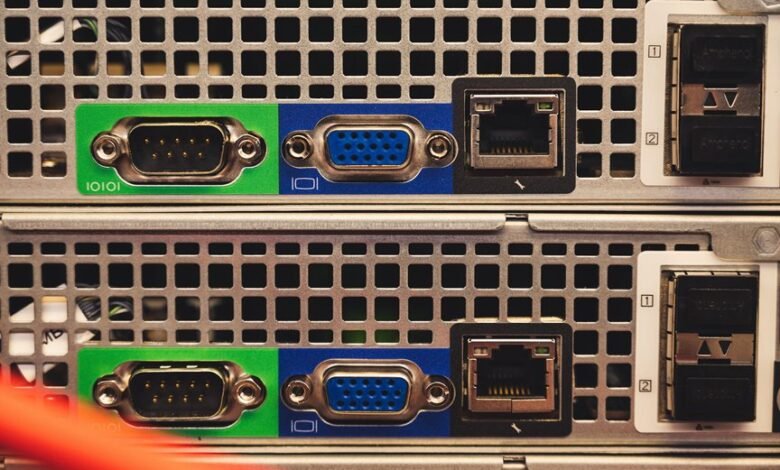
The guide examines how to access 172.17.1.10:8090 within a controlled network, emphasizing prerequisites, authentication, and protocol expectations. It presents a precise sequence for establishing reachability, verifying secure entry points, and managing credentials to minimize risk. Traffic locality and access controls are analyzed to ensure auditable changes during the connection lifecycle. The discussion points to practical steps while suggesting there is more to consider beyond the initial setup.
A Simple Guide to 172.17.1.10:8090 Step by Step
172.17.1.10:8090 is a non-routable private IP address combined with a high-numbered port commonly used for local network services. The analysis emphasizes containment boundaries, documenting protocol expectations and access controls. It examines potential implications for network security and observed network latency, highlighting how internal routing decisions and firewall policies influence performance. Conclusions emphasize disciplined configuration and auditable change management for resilience.
Step-by-Step Instructions for Accessing 172.17.1.10:8090
From the preceding discussion on containment boundaries, a practical path to access 172.17.1.10:8090 is outlined by establishing verified network prerequisites, authentication requirements, and protocol expectations. This Step-by-Step framework emphasizes Idea A and Idea B, detailing secure entry points, credential handling, and session integrity. The approach remains analytical, precise, and freedom-oriented, avoiding unnecessary elaboration while ensuring reproducible, minimal-risk connectivity.
What Is 172.17.1.10:8090 and Why It Matters?
To understand its function, one must consider 172.17.1.10:8090 as a network endpoint combining an internal IP address with a non-standard port used by specific services or applications.
The configuration highlights Networking basics and IP routing concepts, illustrating how private networks expose chosen ports for internal traffic.
Understanding this clarifies access control, traffic flow, and service locality within自由 networks.
Troubleshooting Common Issues With 172.17.1.10:8090
As systems rely on a stable endpoint at 172.17.1.10:8090, common issues often stem from misconfigurations, network reachability, or service availability. The analysis emphasizes diagnosing network latency, verifying firewall configuration, and confirming load balancing behavior. Issues may arise from improper port forwarding, stale DNS, or routing misroutes; precise logs and traceroutes guide targeted remediation without unnecessary speculation.
Frequently Asked Questions
Is 172.17.1.10:8090 Accessible From External Networks?
Yes, it may be inaccessible from external networks depending on internal routing, firewall rules, external access policies, and VPN requirements. The evaluation implies securing external exposure while preserving controlled access through vetted internal routing and VPN-enabled pathways.
What Authentication Methods Are Supported for This Address?
Authentication methods vary; the address itself does not enforce a single scheme. In practice, supported methods depend on deployed services, configurations, and authentication gateways. Security considerations include enforcing encryption, least privilege, and regular credential rotation.
Are There Security Risks Using This Internal IP and Port?
Yes, there are security risks associated with internal access to 172.17.1.10:8090, including exposure from misconfigurations, weak authentication, and lateral movement. Mitigation requires network segmentation, strict access controls, and ongoing risk assessments of internal access.
Can Users Access This URL Without VPN or Proxy?
Access without VPN or proxy depends on network exposure; generally, internal 172.17.1.10:8090 is inaccessible externally. Discussion idea1: network isolation emphasizes restricted access, while discussion idea2: VPN necessity may be essential for remote connectivity and security.
What Browsers Are Recommended for Best Results?
Browsers compatibility varies; no single best, but modern Chrome, Firefox, and Edge tend to deliver UI responsiveness, stable network performance, and robust privacy controls. Consider privacy concerns and test across options for optimal balance in your environment.
Conclusion
The evaluation reveals a paradox between accessibility and confinement: 172.17.1.10:8090 offers ready internal reach yet mandates strict, auditable controls. Connectivity appears straightforward, but security boundaries—authentication, protocol expectations, and credential discipline—impose disciplined rigor. In practice, seamless reach must coexist with meticulous governance; efficiency and risk avoidance stand in contrast. The result is a measured openness that, while technically feasible, requires disciplined process to sustain trust, traceability, and reproducible outcomes.