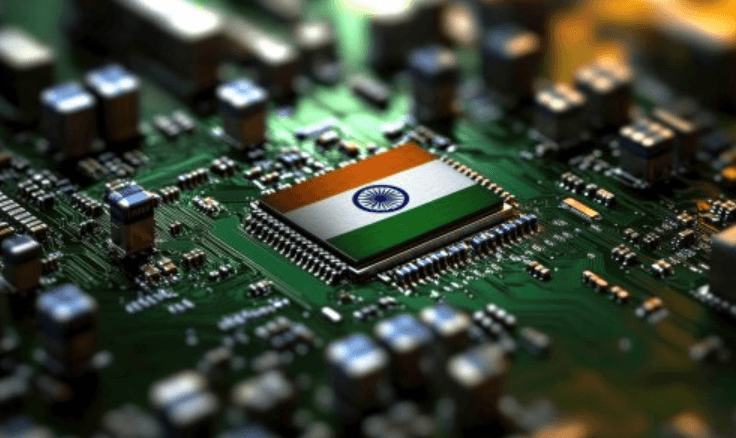
The semiconductor industry has become one of the defining battlegrounds of modern economic competition, and its fortunes ripple outward in ways that reach deep into Indian equity markets. Investors attuned to the pre-market landscape in India know that two instruments are particularly revealing in this context: the SGX Nifty, which captures how institutional participants are pricing Indian equity risk during off-hours, and the Taiwan Index, a benchmark whose composition is so heavily weighted toward semiconductor and technology hardware companies that its daily movements have become a reliable proxy for the health of global chip demand and supply chain sentiment. For Indian investors, grasping the connection between these dynamics and domestic equity performance is increasingly essential.
Why Semiconductor Cycles Matter to Indian Equity Investors
Semiconductor cycles — alternating levels of oversupply and absence that have characterised the chip industry for decades — seem far from the concern of the average Indian equity investor, who has historically targeted domestic consumption and economic sector growth.
The most direct path of impact runs through India’s electronics manufacturing sector, which has grown rapidly as organisations look to diversify their manufacturing footprints. Indian indexed companies concerned with electronics manufacturing offerings, circuit board assembly and manufacturing factor distribution are strongly driven by demand for semiconductor manufacturing and product revenues improve, these companies are looking to improve their order books and make greater use of their production capacity. As the cycle turns and inventory builds up throughout the supply chain, similar organisations face order delay and price stress.
The IT Sector’s Indirect Semiconductor Sensitivity
India’s large IT supply chain, not so immediately discussed now in semiconductor manufacturing or hardware sales, does contain its own form of semiconductor cycle sensitivity through its buyer relationships. Technology services organizations serving semiconductor manufacturers as customers are seeing intermittent volume and advisory sales tied to their manufacturers’ capital expenditure cycles. As chip labs invest heavily in new manufacturing capabilities and ageing fixes, the request for software implementation, records management, and engineering services from Indian IT firms is increasing accordingly.
Equally important is the software application embedded in defence electronics, automotive and industrial systems that use semiconductors. Indian IT groups with strong traditions in embedded software application improvement, firmware engineering, product life cycle management and services can benefit simultaneously, while monitoring the health of the broader semiconductor and manufacturing hardware environment is thus a relevant investment for the industry, a specialist KT promotional group of India verticals.
Capital Market Implications of Technology Benchmark Movements
The impact of the overall performance of technical benchmarks on Indian equities in financial markets is heavily moderated through the channel of institutional threat appetite. While tech-heavy Asian stocks are posting strong gains, institutional traders are rethinking their allocation to generation-related stocks across markets, regularly accompanied by increased buying of Indian IT and electronics stocks. The reverse is equally real — sharp declines in Asian derivatives often lead to hype in stocks in the corresponding Indian sector as portfolio managers rebalance their regional and regional exposures.
This institutional behaviour creates a predictable yet imperfect correlation between the overall performance of pedigree-weighted adjacent benchmarks and particular segments of the Indian fairness market. The relationship is incomplete because domestic elements — rupee movements, rate payment expectations, individual organisation income surprise, and home regulatory performance — additionally drive Indian group charges and can override external signals in any negotiation. It will leave an equity analyst or investor.
Identifying Indian Companies With Genuine Technology Supply Chain Exposure
All Indian companies that describe themselves as having a period without significant exposure to semiconductors and electronics provide chain dynamics described in this paper. Many Indian IT companies operate in software offering areas — application improvement, industrial enterprise process management, and digital transformation consulting — which may relate to the fitness of their enterprise customers instead of semiconductor wheel dynamics. There are similar implications for IT stocks.
The most exposed groups at once to semiconductor supply chain dynamics are those involved in digital design and automation services, chip layout graphics, embedded software for hardware components, test-certification services for semiconductor companies, and electronics manufacturing separate their global record of manufacturing in India product specific universe Identifying their product specific and promotional analytical task that allows investors to build unique, actionable portfolio insights into a general awareness of Asian technology market characteristics.
Building a Resilient Portfolio That Navigates Technology Cycles
Technology cycles, like all industrial cycles, are inevitable. The periods of exuberance that characterise chip supercycles, when capacity is being added aggressively, and valuations of technology companies reach elevated levels, are eventually followed by correction phases as oversupply builds and end-market demand moderates. Indian investors with exposure to technology-linked equities must therefore think about portfolio resilience across the full cycle rather than only in the context of the current phase.
Diversification across both cycle-sensitive technology names and more stable, domestically driven businesses is the most reliable approach to this resilience. Within the technology allocation, balancing companies with software services exposure — which tends to be less volatile than hardware supply chain exposure — with selective positions in companies benefiting from the structural growth of India’s electronics manufacturing sector creates a portfolio that participates in technology growth without bearing the full brunt of cyclical downturns. This balance, informed by a genuine understanding of how regional technology benchmarks and domestic corporate fundamentals interact, is the mark of a genuinely sophisticated Indian equity portfolio strategy.